
GLP-3
Price range: $145.00 through $550.00
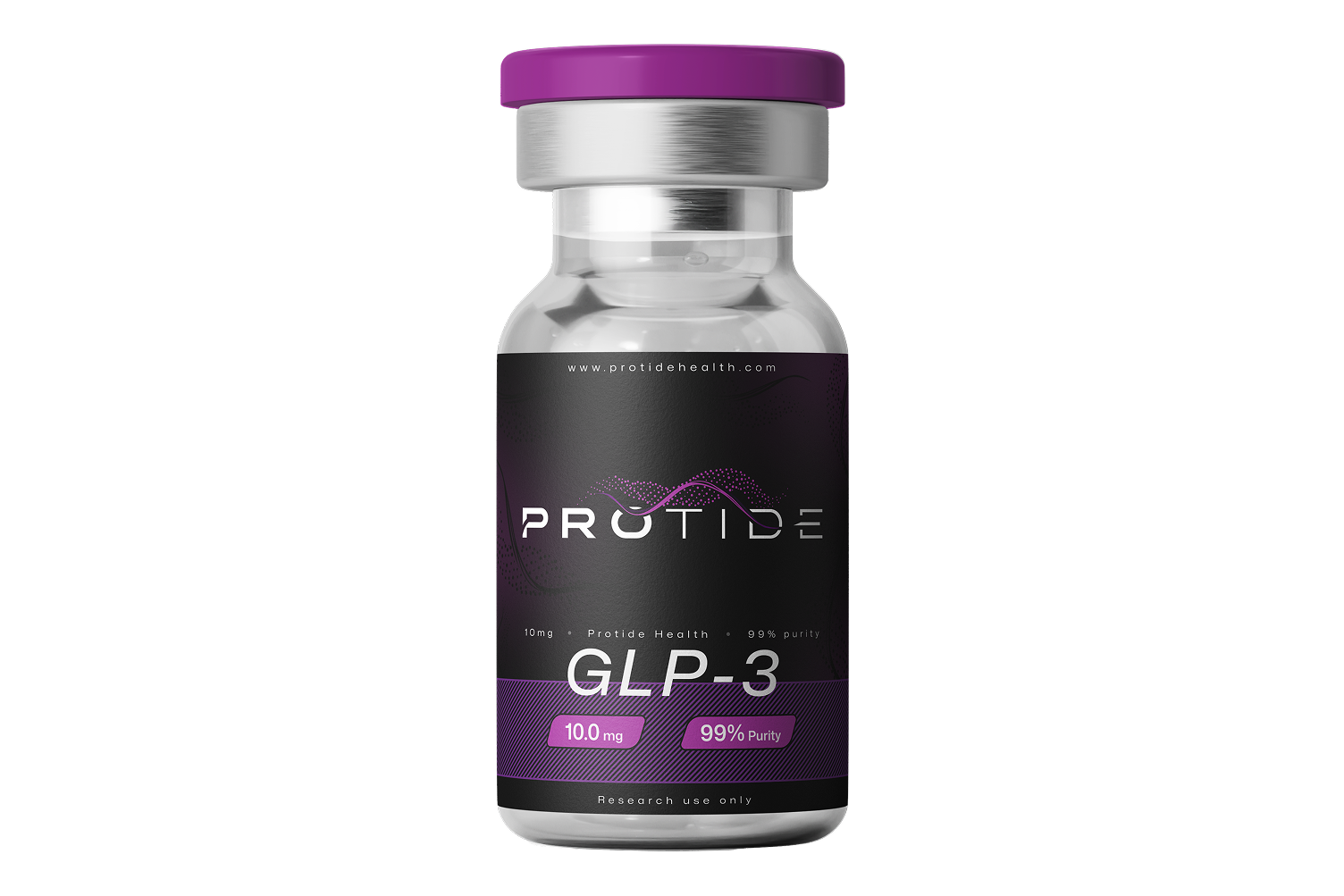
GLP 3 research peptide product shot featuring professionally labeled Protide Health 3mL vials of white to off-white lyophilized material in 10mg, 20mg, 30mg, 40mg, 50mg, and 100mg sizes, with triple-receptor research positioning and laboratory-research-only labeling displayed against a clean scientific background.


GLP 3 Research Peptide – Protide Health USA
GLP 3 Overview & Technical Specifications
GLP 3 is an informal research-market term commonly used to describe a synthetic triple-receptor agonist peptide targeting three metabolically relevant receptor systems:
- GLP-1 receptor
- GIP receptor
- Glucagon receptor
The term GLP-3 should not be interpreted as the name of a naturally occurring glucagon-like peptide or as evidence that a “GLP-3 receptor” exists.
In current peptide-market usage, GLP 3 most commonly refers to retatrutide, also known by the development code LY3437943.
The supplied product specifications describe:
- Available Sizes: 10mg, 20mg, 30mg, 40mg, 50mg, 100mg
- Form: Lyophilized powder
- Vial Size: 3mL
- Purity: 99%+
- Testing: HPLC-MS verified; independent third-party laboratory
- Peptide Type: Synthetic acylated polypeptide
- Molecular Weight: approximately 4700 g/mol
- Appearance: White to off-white lyophilized powder
- Solubility: Soluble in water
- Storage: Store sealed at ≤6°C and protected from heat, light, and moisture
The approximately 4700 g/mol molecular-weight specification is consistent with the published molecular mass of retatrutide, approximately 4731 g/mol.
Technical Identity Context
Published retatrutide reference data include:
- Research Name: Retatrutide
- Development Code: LY3437943
- Class: Synthetic lipidated/acylated peptide
- Receptor Profile: GLP-1R / GIPR / GCGR triple agonist
- Molecular Formula: C221H342N46O68
- Molecular Weight: approximately 4731.4 g/mol
- CAS Number: 2381089-83-2
- Peptide Length: 39 residues
- Structural Feature: Fatty-diacid acylation through a linker
Because GLP 3 itself is an informal label rather than an official chemical name, researchers should verify identity using analytical records and compound-specific documentation rather than relying on the nickname alone.
What Is GLP 3?
The keyword what is glp 3 commonly reflects confusion created by GLP-1 terminology.
GLP-1 is a naturally occurring glucagon-like peptide hormone.
GLP-2 is also a real endogenous peptide.
There is no corresponding naturally occurring hormone formally called GLP-3.
Instead, “GLP-3” has become informal shorthand for compounds acting at three metabolic receptors.
In the current research context, the label most often refers to retatrutide, which activates:
- GLP-1R
- GIPR
- GCGR
This is why triple agonist is scientifically more precise terminology than GLP-3.
GLP-3 Peptides & Triple-Receptor Agonism
The phrase glp-3 peptides is often used loosely to describe synthetic multi-receptor metabolic peptides.
Retatrutide is designed as one peptide molecule capable of activating three receptors.
These receptors participate in different physiological signaling systems.
GLP-1 Receptor Research
GLP-1 receptor activation is associated experimentally with:
- Glucose-dependent insulin secretion
- Pancreatic beta-cell signaling
- Gastric-emptying pathways
- Central appetite signaling
- cAMP-associated receptor activation
GIP Receptor Research
GIP receptor signaling is associated with:
- Glucose-dependent insulin responses
- Adipose-tissue signaling
- Incretin biology
- Metabolic regulation
Glucagon Receptor Research
Glucagon receptor activation is associated with:
- Hepatic metabolic signaling
- Glucose production
- Energy-expenditure pathways
- Lipid metabolism
The combination of all three receptor activities distinguishes triple agonists from single- and dual-receptor research compounds.
GLP 1 vs GLP 3
The phrase glp 1 vs glp 3 should not be interpreted literally as a comparison between two numbered hormones.
GLP-1
GLP-1 is a naturally occurring peptide hormone derived from proglucagon.
It acts primarily through the GLP-1 receptor.
“GLP-3”
GLP 3 is an informal nickname generally used for a synthetic triple agonist such as retatrutide.
It targets:
- GLP-1R
- GIPR
- GCGR
Therefore, the major difference in glp 1 vs glp 3 terminology is that GLP-1 is a genuine endogenous hormone designation, while GLP-3 is an informal market label for a multi-receptor investigational peptide.
GLP 3 vs GLP 1
The reversed search phrase glp 3 vs glp 1 involves the same distinction.
It would be scientifically inaccurate to describe retatrutide as “GLP-3 hormone.”
A more accurate description is:
synthetic GIP/GLP-1/glucagon triple-receptor agonist
Researchers should therefore distinguish biological nomenclature from informal search terminology.
GLP 3 Mechanism & Receptor Signaling
Research on retatrutide and related triple agonists focuses on coordinated signaling across three class B G protein-coupled receptors.
These pathways can involve:
- Gs protein activation
- Adenylate cyclase
- Cyclic AMP
- Protein kinase A
- Hormone secretion
- Metabolic signaling
- Central nervous system pathways
- Hepatic responses
- Adipose-tissue signaling
The biological outcome of simultaneous receptor activation depends on receptor potency, experimental model, species, concentration, tissue distribution, and pharmacokinetic characteristics.
Triple-receptor activity should therefore not be simplified into a single universal mechanism.
Acylated Peptide Design
The GLP 3 product is described as a synthetic acylated polypeptide.
Published retatrutide chemistry includes lipidation with a long-chain fatty-diacid moiety attached through a linker.
Lipidation is commonly used in peptide engineering to alter properties such as:
- Protein binding
- Molecular exposure
- Enzymatic stability
- Pharmacokinetic persistence
- Distribution
These structural features distinguish lipidated incretin-receptor agonists from short unmodified peptides.
GLP 3 Side Effects: Evidence Context
The phrase glp 3 side effects generally refers to human clinical research involving retatrutide.
Clinical trials have reported adverse events, particularly gastrointestinal events, in controlled investigational settings.
However, several distinctions are critical:
- Clinical-study material is manufactured under pharmaceutical-development conditions.
- Trial participants are screened and monitored.
- Study dosing is protocol controlled.
- Commercial research material is not equivalent to an investigational drug product.
- Human clinical findings do not establish the safety of a laboratory research vial.
Protide Health therefore does not provide a human safety profile for this research material.
GLP-3 Clinical Research Context
Retatrutide has progressed through large clinical-development programs.
As of September 2026, retatrutide remains investigational and is not FDA approved.
Eli Lilly has reported Phase 3 data from multiple trials, while additional programs remain underway.
Those trials investigate regulated retatrutide pharmaceutical material.
They do not establish human suitability of independently supplied GLP 3 laboratory research material.
The Protide Health product is supplied solely for laboratory use.
What GLP 3 Does Not Mean
The term GLP 3 should not be interpreted to mean:
- A naturally occurring GLP-3 hormone
- A GLP-3 receptor
- An FDA-approved GLP-3 medication
- A third form of endogenous GLP
- A formal scientific drug class
The terminology is primarily search-driven shorthand for triple-receptor agonist research.
Research Applications
Qualified laboratories may investigate GLP 3 in experimental systems involving:
- GLP-1 receptor signaling
- GIP receptor signaling
- Glucagon receptor signaling
- Receptor-selectivity assays
- cAMP signaling
- Peptide-receptor binding
- Metabolic signaling models
- Structure-activity relationships
- Analytical peptide characterization
- Comparative incretin research
The exact experimental design should depend on the research question and validated assay methodology.
Comparison With Other Protide Health Research Peptides
Researchers examining other metabolic peptide systems may review Survodutide 10mg for a mechanistically distinct dual-receptor research peptide.
The Sermorelin research peptide provides a separate GHRH-related receptor-signaling system.
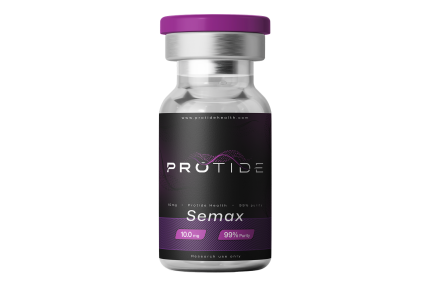
Researchers may also examine Semax 10mg for a structurally and mechanistically unrelated neuropeptide research model.
These compounds should not be considered interchangeable with GLP 3 or retatrutide-related triple agonists.
Research Format & Storage
Protide Health supplies GLP 3 as white to off-white lyophilized research material in 3mL vials.
Available quantities include:
- 10mg
- 20mg
- 30mg
- 40mg
- 50mg
- 100mg
The supplied analytical specification states:
- Purity: 99%+
- Testing: HPLC-MS verified
- Laboratory Verification: Independent third-party testing
According to the supplied storage specification:
- Store at ≤6°C
- Keep sealed
- Protect from heat
- Protect from direct light
- Protect from moisture
The supplied product is described as soluble in water.
These statements describe the research material and do not constitute human-use preparation instructions.
Research Limitations
Interpretation of GLP 3 research requires several important limitations:
- “GLP-3” is not a formal scientific compound class.
- There is no naturally occurring GLP-3 hormone.
- There is no GLP-3 receptor.
- The approximately 4700 g/mol specification is consistent with retatrutide, but identity should ultimately be confirmed analytically.
- Triple-receptor signaling is more complex than single-receptor activation.
- Clinical retatrutide research uses regulated investigational pharmaceutical material.
- Trial results cannot establish safety or efficacy for independently supplied research material.
- Animal models cannot establish equivalent human outcomes.
- Human clinical findings cannot be converted into unsupervised administration guidance.
- Retatrutide remains investigational and unapproved as of September 2026.
- Protide Health laboratory material is not an FDA-approved drug product.
For these reasons, GLP 3 should be presented strictly as a research compound.
Literature & Citation Index
LY3437943, a Novel Triple GIP, GLP-1 and Glucagon Receptor Agonist in People With Type 2 Diabetes
Year: 2022
Research Context: Retatrutide/LY3437943, triple-receptor pharmacology, GLP-1R, GIPR, GCGR signaling, metabolic endpoints, and early human clinical development.
Triple-Hormone-Receptor Agonist Retatrutide for Obesity
Journal: New England Journal of Medicine
Year: 2023
Research Context: Phase 2 clinical evaluation of retatrutide in adults with obesity or overweight, including efficacy and adverse-event assessment.
A Rationally Designed Monomeric Peptide Triagonist Corrects Obesity and Diabetes in Rodents
Journal: Nature Medicine
Year: 2015
Research Context: Experimental GLP-1/GIP/glucagon triple agonism, receptor contributions, glycemic control, energy expenditure, and rodent metabolic models.
Researchers can review broader triple agonist and retatrutide literature indexed by PubMed for peer-reviewed research.
Frequently Asked Questions
What is GLP 3?
GLP 3 is an informal term used in the research-peptide market for triple-receptor agonist peptides. It most commonly refers to retatrutide, which targets GLP-1, GIP, and glucagon receptors.
Is GLP-3 a real hormone?
No. GLP-1 and GLP-2 are real proglucagon-derived peptides, but there is no naturally occurring hormone formally called GLP-3.
Is there a GLP-3 receptor?
No. The term refers informally to triple-receptor agonism rather than to a GLP-3 receptor.
What receptors does GLP 3 research involve?
Research typically involves:
- GLP-1 receptor
- GIP receptor
- Glucagon receptor
What is the molecular weight?
The supplied product specification states approximately 4700 g/mol. Published retatrutide reference material is approximately 4731 g/mol.
Is GLP 3 the same as retatrutide?
In current informal peptide-market usage, GLP 3 most commonly refers to retatrutide or retatrutide-like triple agonist research. The scientifically preferred name for retatrutide is retatrutide or LY3437943 rather than GLP-3.
What is the difference between GLP 1 vs GLP 3?
GLP-1 is an endogenous hormone acting through GLP-1R. “GLP-3” is an informal nickname for a synthetic triple agonist acting at GLP-1R, GIPR, and GCGR.
What about GLP 3 vs GLP 1?
The same distinction applies: GLP 3 vs GLP 1 compares an informal triple-agonist label with a genuine physiological peptide hormone.
What are GLP 3 side effects?
Clinical retatrutide trials have documented adverse events under controlled investigational conditions, but those findings do not establish a safety profile for Protide Health laboratory material.
Is GLP 3 FDA approved?
No. Retatrutide remains investigational and is not currently FDA approved.
What purity does Protide Health specify?
Protide Health specifies 99%+ purity, with HPLC-MS verification and independent third-party laboratory testing.
What sizes are available?
The product is available in:
10mg, 20mg, 30mg, 40mg, 50mg, and 100mg.
Is GLP 3 intended for human use?
No. This material is supplied solely for biochemical, receptor-signaling, cellular, analytical, in-vitro, and qualified preclinical research.
Laboratory Terms & Compliance
Laboratory Research Use Only
This GLP 3 product is supplied exclusively for laboratory research, analytical testing, in-vitro studies, receptor pharmacology, molecular research, cellular studies, and qualified preclinical experimentation.
It is not intended for human or veterinary consumption, medical use, diagnostic use, therapeutic use, weight-loss treatment, diabetes treatment, injection, or clinical administration.
No human dosage, titration schedule, injection instructions, administration frequency, treatment cycle, body-weight calculation, or human-use preparation guidance is provided.
The purchaser is responsible for appropriate laboratory handling, storage, and use under applicable institutional, federal, state, and local requirements.
For research use only.
| Select vial strength |
100mg ,10mg ,15mg ,20mg ,24mg ,30mg ,40mg ,50mg |
|---|


MAECENAS IACULIS
Vestibulum curae torquent diam diam commodo parturient penatibus nunc dui adipiscing convallis bulum parturient suspendisse parturient a.Parturient in parturient scelerisque nibh lectus quam a natoque adipiscing a vestibulum hendrerit et pharetra fames nunc natoque dui.
ADIPISCING CONVALLIS BULUM
- Vestibulum penatibus nunc dui adipiscing convallis bulum parturient suspendisse.
- Abitur parturient praesent lectus quam a natoque adipiscing a vestibulum hendre.
- Diam parturient dictumst parturient scelerisque nibh lectus.
Scelerisque adipiscing bibendum sem vestibulum et in a a a purus lectus faucibus lobortis tincidunt purus lectus nisl class eros.Condimentum a et ullamcorper dictumst mus et tristique elementum nam inceptos hac parturient scelerisque vestibulum amet elit ut volutpat.
Related products
Cagrilintide
Price range: $95.00 through $155.00
GLP-2
Price range: $110.00 through $400.00
Reviews
There are no reviews yet.